Posts

Showing posts with the label reading

Week 15 Reading Notes: Silly Jura, Part B

Image
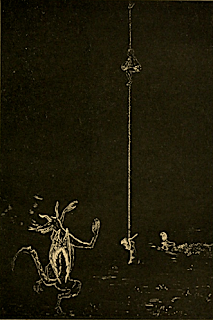
Illustration from "Silly Jura" Link to story. Title: Silly Jura Publication: Czech Folk Tales, 1917 (English: The Key of Gold, 1922) Author: Beneš Metod Kulda Translator: Josef Baudiš Notes: Beneš Metod Kulda (1820-1903) was a Czech priest, ethnographer and writer who retold many Czech folk tales, including Silly Jura. Josef Baudiš (1883-1933) was a Czech Celticist who translated various Czech stories into English, including the works of Kulda. Characters: Two brothers Jura  (pronounced “yoo-ra”) Burgomaster (mayor) The cat The lady Places: Czech Republic Events: Two brothers go out to steal items for a feast The brothers bully their youngest brother before leaving Jura goes to pick nuts at the burgomaster's place Jura cracks the nuts in the charnel-house (grave vault) The burgomaster and his servant go to investigate the cracking sound Jura accidentally scares off the two of them, indirectly curing the burgomaster’s illness The burgomaster rewards Jura the next d...

Week 15 Reading Notes: The Three Roses, Part A

Image
The Basilisk Link to story. Title: The Three Roses Publication: Czech Folk Tales, 1917 (English:  The Key of Gold, 1922) Author: Josef Štefan Kubín Translator: Josef Baudiš Notes: Josef Štefan Kubín (1864-1965) was a Czech folklorist who published The Three Roses in 1917. Josef Baudiš (1883-1933) was a Czech Celticist who translated various Czech stories into English, including the works of Kubín. Characters: Mother Daughter 1 Daughter 2 Daughter 3, Mary Basilisk Places: Town market Forest Castle Palace garden Events: Mother asks her daughters if they want souvenirs Mother goes to the town market Mother gets lost in the forest during nightfall Mother finds palace garden and takes three roses The Basilisk demands for her daughter in exchange for the roses Mother returns home and tells Mary what happened Mary goes to the castle Mary nurses the Basilisk for three hours a day The Basilisk demands Mary to cut his head off on the third day The Basilisk turns into a beautiful y...

Week 14 Reading Notes: How the Dragon was Tricked (cont.), Part B

Image
Illustrated by H. J.  Ford Link to story. Title: How the Dragon was Tricked (cont.) Publication: The Pink Fairy Book, 1897 Author: Andrew Lang Illustrator: H. J. Ford Notes: Andrew Lang (March 31, 1844—July 20, 1912) was a Scottish poet, novelist, and anthropologist who wrote a multitude of folk and fairy tales. In his series of Lang’s Color/Rainbow Fairy Books (a collection of 25 books overall), the ninth installment known as The Pink Fairy Book was published in 1897. Henry Justice Ford (1860—1941), a successful English artist and illustrator, did numerous illustrations for Lang’s books. Characters: Dragon Dragoness Trickster King King’s daughter Places: Europe (based on a Greek tale) Events: As the dragoness is about to kill the trickster, he slays her instead The trickster steals the bedding and returns to the king The king orders the trickster to capture the dragon The trickster waits for two years to grow his beard as a disguise Dressed as a beggar, the trickster visi...

Week 14 Reading Notes: How the Dragon was Tricked, Part A

Image
Illustration by H. J. Ford Link to story. Title: How the Dragon was Tricked Publication: The Pink Fairy Book, 1897 Author: Andrew Lang Illustrator: H. J. Ford Notes: Andrew Lang (March 31, 1844—July 20, 1912) was a Scottish poet, novelist, and anthropologist who wrote a multitude of folk and fairy tales. In his series of Lang’s Color/Rainbow Fairy Books (a collection of 25 books overall), the ninth installment known as The Pink Fairy Book was published in 1897. Henry Justice Ford (1860—1941), a successful English artist and illustrator, did numerous illustrations for Lang’s books. Characters: Father Oldest brother Youngest brother/Trickster Shepherd King Flying horse Dragon Dragoness Places: Europe (based on a Greek tale) Events: A man has two sons that do not get along Out of jealousy, the eldest son ties the youngest son to a tree The boy tricks a shepherd into freeing him, driving away his sheep The trickster becomes popular for his mischief The king hires the trickster to st...

Week 13 Reading Notes: Why the Red Dragon is the Emblem of Wales, Part B

Image
Illustration by Willy Pogány Link to story. Title: Why the Red Dragon is the Emblem of Wales Publication: The Welsh Fairy Book, 1908 Author: W. Jenkyn Thomas Notes: William Jenkyn Thomas (July 5, 1870—March 14, 1959) was a Welsh author, lecturer and teacher best known for The Welsh Fairy Book, published in 1908. The illustrations were made by William Andrew Pogány, or Willy Pogány (August 24, 1882—July 30, 1955), a Hungarian illustrator known for his pen and ink drawings of myths and fables. Characters: King Vortigern 12 wise men The Saxons Myrddin Emrys (Merlin) Aurelius Ambrosius Places: Eryni Mountains, Gwynedd (Wales) Dinas Emrys Summit (previously Dinas Ffaraon Summit) Events: King Vortigern calls for his wise men The wise men suggest fortifying a new city Though the city is supposed to be built in Dinas Ffaraon Summit, materials go missing The wise men advise the king to find a fatherless child and use his blood on the citadel A boy from Bassaleg named Myrddin Emrys is b...

Week 13 Reading Notes: Hu Gadarn, Part A

Image
The Afanc, by Willy Pogány Link to story. Title: Hu Gadarn Publication: The Welsh Fairy Book, 1908 Author: W. Jenkyn Thomas Notes: William Jenkyn Thomas (July 5, 1870—March 14, 1959) was a Welsh author, lecturer and teacher best known for The Welsh Fairy Book , published in 1908. The illustrations were made by William Andrew Pogány, or Willy Pogány (August 24, 1882—July 30, 1955), a Hungarian illustrator known for his pen and ink drawings of myths and fables. Characters: Hu Gadarn (Hu the Mighty) Cymry people (Welsh) The Afanc, a variety of dragon Places: Honey Island (Britain) Deffrobani (Summer Country, Wales) Llyn Llion (Lake of Waves), the Afanc’s home Llyn y Ffynnon Las (Lake of the Green Well), the Afanc’s prison Events: Hu Gadarn rules over the Cymry people Hu Gadarn and the Cymry move from Deffrobani to Honey Island The Cymry are troubled by the Afanc, a monster flooding their homeland Hu Gadarn uses a girl as bait to lure the Afanc elsewhere While the girl distracts ...

Week 12 Reading Notes: The Laidly Worm of Spindleston Heugh, Part B

Image
Childe Wynd and his sister Margaret Link to story. Title: The Laidly Worm of Spindleston Heugh Publication: English Fairy Tales, 1890 Author: Joseph Jacobs Notes: Joseph Jacobs (August 29, 1854—January 30, 1916) was an Australian folklorist, critic and historian who popularized many English fairy tales. Jacobs published English Fairy Tales in 1890, with illustrations by John D. Batten (October 8, 1860—August 5, 1932). Characters: King Late Queen Witch Queen Prince Childe Wynd Princess Margaret/Laidly Worm Places: Bamborough Castle Spindleston Heugh Events: A king lives with his wife and two children in Bamborough Castle Childe Wynd looks for fortune, meanwhile the queen passes away While mourning, the king goes hunting and meets a beautiful witch The king brings her back as his new queen Margaret is kind to her stepmother, but the new queen envies her beauty The witch queen turns Margaret into a dragon, or laidly worm The dragon leaves the castle for the mountain of Spindleston...

Week 12 Reading Notes: The Stars in the Sky, Part A

Image
Illustration by  John D. Batten Link to story. Title: The Stars in the Sky Publication: More English Fairy Tales, 1894 Author: Joseph Jacobs Notes: Joseph Jacobs (August 29, 1854—January 30, 1916) was an Australian folklorist, critic and historian who popularized many English fairy tales. Jacobs published More English Fairy Tales in 1894, with illustrations by John D. Batton (October 8, 1860—August 5, 1932). Characters: Lassie Stars Mill-dam Brooklet Good Folk Lassie’s mother Four Feet/Horse No Feet/Fish Places: England Events: Young Lassie is lonely and plays by herself under the stars Lassie is determined to find the stars The Mill-dam tells Lassie to swim down the river The Brooklet tells Lassie to paddle down the banks The Good Folk tell Lassie to find the Horse The Horse tells Lassie to find the Fish The Fish tells Lassie to take the stairs to the stars Lassie climbs the stairs and then falls down Lassie falls on the ground and cries—it was only a dream

Week 11 Reading Notes: The Uktena and the Ulûñsû'tï, Part B

Image
The Uktena Link to story. Title: The Uktena and the Ulûñsû'tï Publication: Myths of the Cherokee, 1900 Author: James Mooney Notes: James Mooney (February 10, 1861–December 22, 1921) was an American ethnographer and author who studied Native American groups, particularly Cherokee. He published Myths of the Cherokee during Ghost Dance, a 19-century religious movement that incorporated Native American belief systems. Cherokee IPA: Uktena [noun]: “ook-teh-nah” Ulûñsû'tî [noun]: “oo-lune-soo-tee” Agän-uni'tsï [noun]: “ah-gen-oo-neat-see” Gälûñ'lätï [noun]: “gah-lune-lah-tee” Characters: Sun, who plagues the earth after seeing people’s misdeeds Little Men, vengeful of Sun’s actions Uktena, “The Keen-Eyed” monster snake (with a diamond crest called a Ulûñsû'tî) Rattlesnake, who was sent to bring vengeance instead of Uktena Agän-uni'tsï, a Cherokee warrior Places: North America Events: Sun becomes angry with the people and sends a plague Little Men is mad at Sun...

Week 11 Reading Notes: The Crane and the Hummingbird, Part A

Image
Whooping Crane Ruby Throated Hummingbird Link to story. Title: The Crane and the Hummingbird Publication: Myths of the Cherokee, 1900 Author: James Mooney Notes: James Mooney (February 10, 1861–December 22, 1921) was an American ethnographer and author who studied Native American groups, particularly Cherokee. He published Myths of the Cherokee during Ghost Dance, a 19-century religious movement that incorporated Native American belief systems. Characters: Crane Hummingbird The woman Places: North America Events: A Crane and a Hummingbird love the same woman The woman preferred the Hummingbird for his looks The Crane challenges the Hummingbird to a race to win over the woman For seven days the birds race around the woman’s house Despite the Hummingbird’s swiftness, the Crane is able to fly for long hours The Crane wins the race on the seventh day The woman says she will never marry the ugly crane and remains single

Week 10 Reading Notes: The Maiden Who Loved a Star, Part B

Image
Purple sage in Texas Link to story. Title: The Maiden Who Loved a Star Publication: When the Storm God Rides: Tejas and Other Indian Legends, 1936 Author: Florence Stratton Illustrator: Berniece Burrough Notes: Florence Stratton (1883—January 28, 1938) was an American journalist and writer Having returned to Texas for her career in journalism, she published the Tejas Indian folklore anthology “When the Storm God Rides” in 1936. Characters: Young girl Sky dweller Old woman Great Spirit Places: Texas Events: A young girl forages for prickly pear fruit in the desert The girl catches a glimpse of a winking star The girl dreams about the sky dweller living in the stars The girl goes out to the desert to see the star for a week She continues to dream of the sky dweller, but they can’t be together The girl asks the old woman how to die to join the star The old woman suggests another option in order to live The girl drinks the old woman’s potion and turns into a desert shrub The sky d...

Week 10 Reading Notes: When the Rainbow Was Torn, Part A

Image
A rainbow hanging over a cactus Link to story. Title: When the Rainbow Was Torn Publication: When the Storm God Rides: Tejas and Other Indian Legends, 1936 Author: Florence Stratton Illustrator: Berniece Burrough Notes: Florence Stratton (1883—January 28, 1938) was an American journalist and writer Having returned to Texas for her career in journalism, she published the Tejas Indian folklore anthology “When the Storm God Rides” in 1936. Characters: Rainbow Cactus flowers Places: Texas Events: There are flowers with every color of the rainbow The white cactus flowers looked to the rainbow for their colors The rainbow stays away from the cactus’ sharp thorns The rainbow is trodden after a heavy rainfall The red, orange and yellow bands get caught on the cactus The cactus flowers remain colorful to this day

Week 9 Reading Notes : The Moon and the Stars, Part B

Image
Kweku Tsin flees from the dragon Link to story.   Title:   The Moon and the Stars Publication: West African Folk-Tales, 1917 Author: William H. Barker and Cecilia Sinclair Notes: William H. Barker (1882-1929) was an American missionary who collected stories from the west coast of Africa to compile into his book, “West African Folk-Tales,” published in 1917. Cecilia Sinclair was the coauthor and the illustrator of the novel. Characters: Anansi Kweku Tsin, Anansi’s son Dragon Rooster Anansi’s friends Places: Ghana Events: Kweku Tsin supplies food for his family Kweku Tsin spots a dragon while out hunting Kweku Tsin and his father Anansi go to see the dragon The dragon captures them and holds them hostage in his castle Kweku Tsin devises an escape plan for the captives Kweku Tsin collects rice for the dragon’s servant, the rooster Kweku Tsin makes a rope ladder Kweku Tsin gathers leftover bones and the dragon’s fiddle The captives begin to climb the ladder with the dragon...

Week 9 Reading Notes: How We Got the Name “Spider Tales”, Part A

Image
Anansi Link to story. Title: How We Got the Name “Spider Tales” Publication: West African Folk-Tales, 1917 Author: William H. Barker and Cecilia Sinclair Notes: William H. Barker (1882-1929) was an American missionary who collected stories from the west coast of Africa to compile into his book, “West African Folk-Tales,” published in 1917. Cecilia Sinclair was the coauthor and the illustrator of the novel. Characters: Nyankupon, chief of the gods Spider/Anansi, the trickster Bees Boa Tiger Places:  Ghana Events: Anansi envies Nyankupon’s fame Anansi asks to be written into future stories Nyankupon sends Anansi on a quest to fetch three things Anansi tricks the bees to fly into a jar Anansi tricks the boa to hang from a stick Anansi tricks the tiger into following him Nyankupon, impressed, calls the old tales Anansi tales References: http://www.loyalbooks.com/book/west-african-folk-tales-by-william-h-barker https://en.wikipedia.org/wiki/Anansi

Week 7 Reading Notes: The Quest of the Jewel, Part B

Image
Illustration by Utagawa Kuniyoshi Link to story. Title: The Quest of the Jewel Publication: The Romance of Old Japan, 1917 Author: E. W. Champney and F. Champney Notes: Elizabeth Williams Champney (February 6, 1850—October 13, 1922) was an American author and world traveler. Her son, Edouard Frère Champney (May 4, 1874—June 4, 1929) was born in France and worked as an architect. Elizabeth’s “Romance” books, based on her travels and myths from around the world, were co-written with her son. This legend is a continuation of “The Jewel of the Heart’s Desire,” following the story of Empress Jingū, while fighting against the Korean navy, has lost the Tide Jewel. Characters: Takeuchi, the court minister Tamatori, the fisher maid Empress Jingū Benten, Ryūjin’s daughter Ryūjin, the sea dragon Places: Japan Events: Empress Jingū banishes Takeuchi for losing the Jewel of Heart’s Desire Takeuchi resolves to throw himself off a cliff Tamatori, in love with...

Week 7 Reading Notes: The Miraculous Mirror, Part A

Image
Shinto Shrine Mirror Link to story. Title: The Miraculous Mirror Publication: The Romance of Old Japan, 1917 Author: E. W. Champney and F. Champney Notes: Elizabeth Williams Champney (February 6, 1850—October 13, 1922) was an American author and world traveler. Her son, Edouard Frère Champney (May 4, 1874—June 4, 1929) was born in France and worked as an architect. Elizabeth’s “Romance” books, based on her travels and myths from around the world, were co-written with her son.  Characters: Amaterasu, the Sun Goddess Susa-no-wo, Demon of Fire Uzume, Goddess of Laughter Taji-Karaô, The Strong Places: Japan Events:  Amaterasu gives bountiful light and controls the day While traveling in her shuttle, Susa-no-wo scares Amaterasu Amaterasu flees and hides in a cave The people miss the Sun Goddess Uzume crafts a mirror of gold to trick Amaterasu Amaterasu, jealous of her reflection, is lured out of the cave Taji-Karaô blocks of t...

Week 6 Reading Notes: Siddhartha Becomes the Buddha, Part B

Image
Buddha Statue at Tōdai-ji in Nara, Japan (taken by yours truly)  Link to story. Title: Siddhartha Becomes the Buddha Publication: 1922 Author: André-Ferdinand Hérold (February 24, 1865—October 23, 1940) Translator: Paul Charles Blum (1898—1981) Notes: André-Ferdinand Hérold (February 24, 1865—October 23, 1940) was a French writer and poet who published “The Life of Buddha” in 1922. It was translated into English by author and translator Paul Charles Blum (1898—1981). Characters: Siddhartha, the hero Events: Siddhartha meditates after defeating Mara, the Evil One Siddhartha has visions of the world in meditation The next morning, Siddhartha becomes the Buddha The gods great the next Buddha

Week 6 Reading Notes: Siddhartha's First Meditation, Part A

Image
Siddhartha under the Bohdi Tree Link to story. Title: Siddhartha’s First Meditation Publication: 1922 Author: André-Ferdinand Hérold (February 24, 1865—October 23, 1940) Translator: Paul Charles Blum (1898—1981) Notes: André-Ferdinand Hérold (February 24, 1865—October 23, 1940) was a French writer and poet who published “The Life of Buddha” in 1922. It was translated into English by author and translator Paul Charles Blum (1898—1981). Characters: Prince Siddhartha Visvamitra, Siddhartha’s teacher Five traveling hermits King Suddhodana Places: Kapilavastu (city in Shakya, India/Nepal) Events: Visvamitra is instructed to teach Siddhartha Siddhartha masters the scripts Siddhartha goes traveling Siddartha meditates under a tree The five hermits prophesize Siddartha’s greatness as the Buddha Suddhodana is happy to see that his son is doing well Siddhartha tells his father that they “must seek the great truths” Siddhartha return...

Week 5 Reading Notes: Fate, Part B

Image
A Georgian dagger from 1800 Link to story. Title: Fate Publication: 1894 Author: Unknown Translator: Marjory Wardrop (November 11, 1869—December 7, 1909) Marjory Wardrop Notes: “Fate” was originally taken from a Georgian folklore collection titled “Khalkhuri Zghaprebi” (Georgian for “folk tales”), though the author remains unknown. Marjory Scott Wardrop was an English scholar and translator of Georgian literature who compiled many stories into “Georgian Folk Tales,” which was published in London in 1894. Characters: King Prince Angel Man at the palace Weaver Weaver’s wife Weaver’s daughter Places: Palace of the King Palace of Fate Woods Palace in the woods Events: A king had an only son who everyone admired The prince goes to seek out his fate An angel directs him to the palace of fate A man directs the prince to his fate The prince learns he will marry a weaver’s daughter who is ill The prince is determined to ...